

SANDIQLAR
İRS
KORPORATİV
FƏRDİ
HEKAYƏT
RUZNAMƏ
{{ cartLbl }}
{{ profLabel }}
SİFARİŞ
{{ sndIcon }}
MENYU
İPƏK YOLUNUN YADIGARI
Hər sandıqda
bir şəhərin yaddaşı
Bir zamanlar Ordubadın bəhrəsi karvanlarla Təbrizə, Tiflisə, İstanbula gedirdi. Bu gün həmin irs nömrəli pasportla, əl işi sandıqlarda təqdim olunur.
AŞAĞI SÜRÜŞDÜR
01 — SANDIQLAR
Altı sandıq, altı hekayə
Hər qutunun adı Ordubadın tarixindən gəlir — öz səhifəsi, pasportu və nömrəsi ilə.
{{ xbImgEl }}
{{ xbTag }}
{{ xbQat }}
{{ xbAd }} {{ xbSub }}
{{ xbEpi }}
{{ xbXett }}
{{ xbQiymet }}
SƏHİFƏYƏ KEÇ
02 — İRS
Min illik bağların
davamı
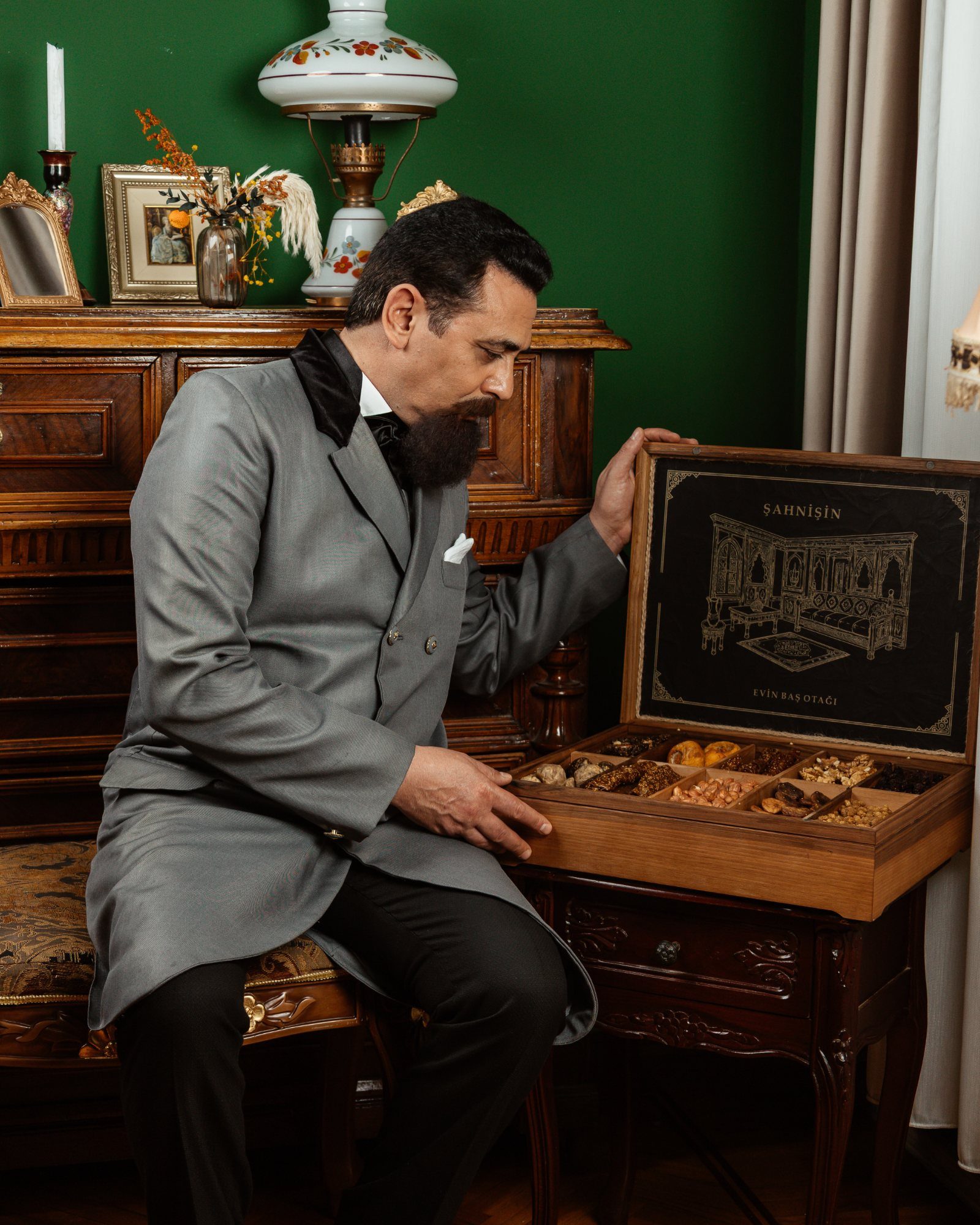
Ordubad — İpək Yolunun üstündə, Zəngəzur dağlarının ətəyində. Buranın ərik qaxı, kişmişi və cəviz mürəbbəsi karvanlarla Təbrizə, Tiflisə, İstanbula gedirdi. Biz həmin ənənəni sandıqlara yığırıq: hər məhsul öz bağından, hər resept öz nəslindən.
6
SANDIQ MODELİ
19
İMZA MƏHSULU
50
ZƏRNİGAR / İL
03 — KORPORATİV · ŞİRKƏTLƏR ÜÇÜN
Şirkət adından, irs dilində
Sandıq dizaynı şirkətinizin brend kitabına uyğun fərdi tərtib edilir.
I.
NAXIŞ VƏ MÖHÜR
Qapaqda şirkət loqosu lazer həkki, brend rənglərinə uyğun lent və kart.
II.
İLLİK RUZNAMƏ
Novruz, Ramazan, Qurban, dövlət bayramları və Yeni il — bir müqavilə, bütün il.
III.
ÜNVANLARA PAYLAMA
Siyahını verirsiniz — hər qutu ad kartı ilə öz ünvanına çatdırılır.
IV.
FƏRDİ KARVANBAŞI
Hər korporativ sifarişə — seçimdən təhvilə qədər bir əlaqə nöqtəsi.
04 — FƏRDİ · EV ÜÇÜN
Bütün kolleksiya —
bir sandıqdan
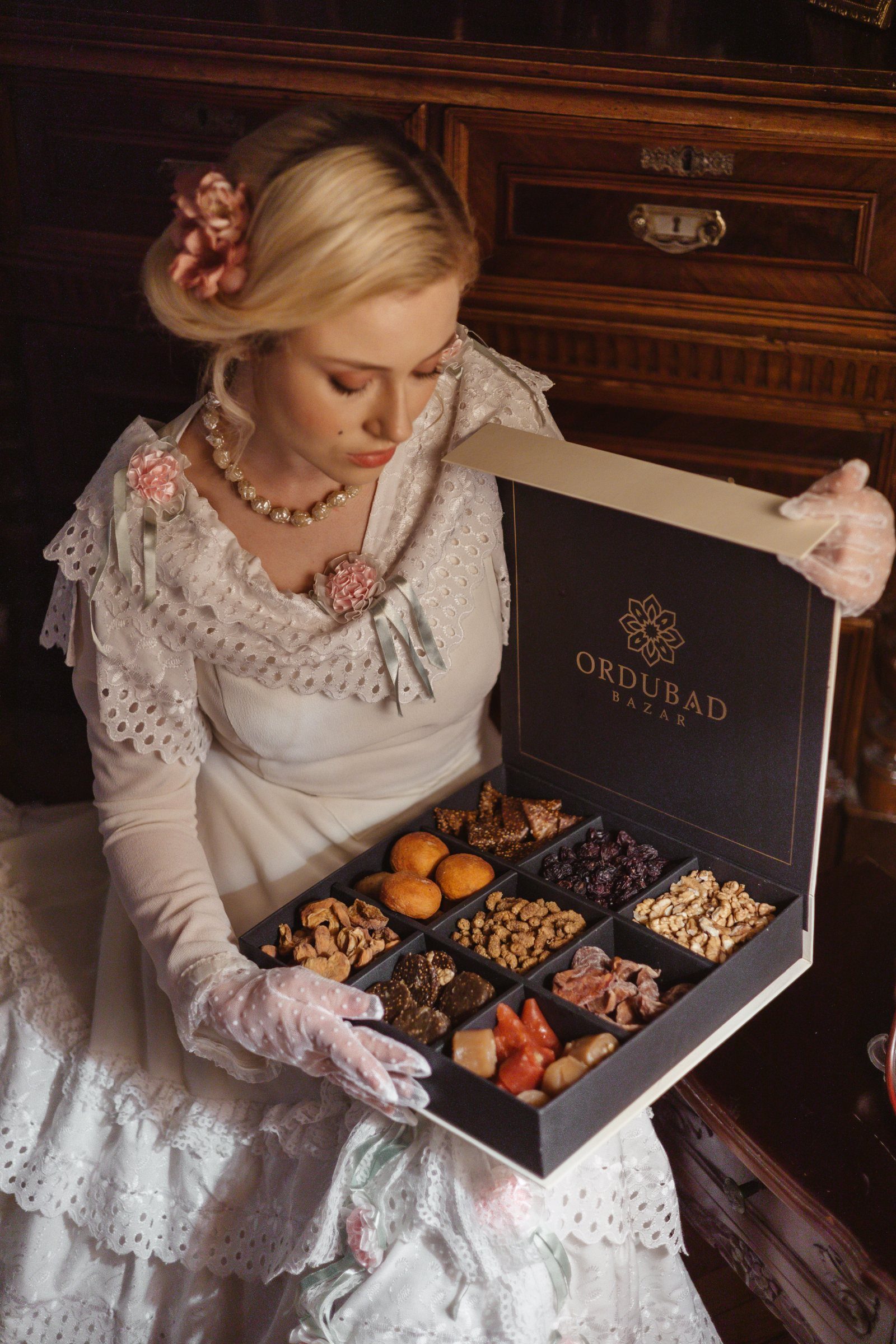
Fərdi sifarişdə də altı cəviz sandığın hamısı və Süfrə qutusu açıqdır — minimum say yoxdur. Bölmələri özünüz doldurun.
{{ b.ad }}
06 — HEKAYƏT
Sandıqların arxasındakı hekayələr
Ordubadın tarixi, bəhrəsi, bayramlarımız, adların mənşəyi və emalatxanadan qeydlər.
BÜTÜN HEKAYƏTLƏR →
‹
{{ n.roma }}
{{ n.ad }}
{{ sndIcon }}
{{ ctaLabel }}
{{ th.wm }}
Ustanın dəftərindən
ZƏRNİGAR SƏHİFƏSİ
No
01
/ 50
ZƏRNİGAR SƏHİFƏ · VI
Zərnigar
Təbii cəviz, 24 əyar qızıl naxış
Ordubad emalatxanası · MMXXVI
Ordubad emalatxanası · MMXXVI
No __ / 50 · USTANIN İMZASI İLƏ
İLDƏ
50
NÜSXƏ
{{ sealTop }}
{{ sealMid }}
{{ sealBot }}
{{ sel.pille }}
{{ sel.ad }}
{{ sel.ad }}
{{ sel.h1sub }}
{{ sel.k1 }}
{{ sel.k1m }}
{{ sel.k2 }}
{{ sel.k2m }}
{{ sel.epiqraf }}
{{ sel.olcu }}
{{ sel.bolme }}
{{ sel.xett }}
{{ th.motto }}
{{ heroImgEl }}
HEKAYƏNİ OXU
{{ sec.l1 }}
{{ sec.a1 }} {{ sec.b1 }}
{{ sel.mena }}
{{ p.t }}
{{ cicekImgEl }}
{{ sel.capCicek }}
HEKAYƏNİN KÖKÜ
{{ r.k }}
{{ r.v }}
{{ openImgEl }}
{{ openCaption }}
{{ sec.l2 }}
{{ sec.a2 }} {{ sec.b2 }}
{{ p.t }}
“
{{ sel.sitat }}
03 — NİYYƏT
{{ sel.konsept }}
{{ sel.brend }}
KİMƏ
{{ sel.kime }}
NƏ VAXT
{{ sel.vaxt }}
AÇILIŞ ANI
{{ sel.acilis }}
QAPAQ MOTİVİ
{{ sel.motiv }}
{{ sec.l4 }}
{{ sec.a4 }} {{ sec.b4 }}
ÇÖL ÖLÇÜ
{{ sel.olcu }}
İÇ BÖLGÜ
{{ sel.bolme }}
TƏRKİB
{{ sel.terkib }}
MATERİAL
{{ sel.material }}
SƏNƏDLƏR
{{ sel.senedler }}
{{ sel.icGiris }}
{{ it.n }}
{{ it.t }}
ÖLÇÜ-BİÇİ
{{ r.k }}
{{ r.v }}
{{ qiymetRowLabel }}
{{ sel.qiymetLabel }}
Zərnigar açıq satışda deyil. İldə cəmi 50 nömrəli nüsxə hazırlanır — müraciətlər qiymətləndirilir, təsdiq olunduqda sizə nüsxə nömrəsi təklif edilir.
{{ ctaLabel }}
XURCUNA AT
{{ detailImgEl }}
04 — KİMƏ
Zəfərin adından verilən hədiyyə
{{ sel.kime }}
{{ p.t }}
{{ sel.ithaf }}
05 — SURƏTLƏR
{{ sel.ad }} yaxından
Ordubad Bazar · fotosessiya MMXXVI
{{ g.el }}
TƏBRİKNAMƏ
{{ sel.mesaj }}
PASPORT KARTINDA · ŞİRKƏTİNİZİN ADI İLƏ
SANDIQLAR
Bağdan sənətə — altı qat
NÖVBƏTİ · {{ nextAd }}
→
{{ n.imgEl }}
{{ n.roma }} · {{ n.qat }}
{{ n.ad }}
{{ n.konsept }}
{{ sel.pille }}
{{ sel.ad }} sizin adınızla
Korporativ sifarişdə qapaqda şirkət loqosu; taxta sandıqlar nömrəli pasportla. Karvanbaşımız iş günü ərzində sizinlə əlaqə saxlayır və maketi təsdiqə göndərir.
‹
Sifariş
{{ cartLbl }}
{{ profLabel }}
SİFARİŞ{{ oAskFor }}
Kimin üçün sifariş edirsiniz?
FƏRDİ · EV ÜÇÜN
Özüm üçün və ya hədiyyə
1 ədəddən · hər ünvanda alıcının adı · çatdırılma ən azı 3 iş günü · ödəniş karvanbaşı təsdiqindən sonra
FƏRDİ SİFARİŞ ›
KORPORATİV · ŞİRKƏTLƏR ÜÇÜN
Şirkət adından
Qapaqda şirkət loqosu · müqavilə və hesab-faktura · ünvan siyahısı üzrə paylama · minimum say qutuya görə
KORPORATİV SİFARİŞ ›
‹ GERİ
{{ oEditTxt }}
DÜZƏLİŞDƏN ÇIX ›
SİFARİŞ · 5 ADDIM
Sandığınızı dəftərə yazaq
KORPORATİV
FƏRDİ
{{ s.t }}
1 · SANDIQLAR VƏ SAY
KATALOQ · PDF ›
{{ r.imgEl }}
{{ r.ad }}
{{ r.sub }}
−
{{ r.q }}
+
ƏLAVƏ SEÇİMLƏR
{{ x.imgEl }}
{{ x.ad }}
{{ x.sub }} · {{ x.price }}
+ ƏLAVƏ ET
{{ oMoreL }}
{{ oRuleMsg }}
2 · TƏRKİB VƏ NAXIŞ
Sandığın tərkibi
USTANIN SEÇİMİ
{{ bx.ad }}
{{ bx.pos }}
MÖHÜRÜM
SAXLANMIŞ MÖHÜRÜ İSTİFADƏ ET
YENİ LOQO
{{ oBrandTxt }}
Qapaq üsulu
Cəviz · lazer qravür
oyma · qiymətə daxildir
Cəviz · qabarıq relyef
qiymətə daxildir
24 əyar qızıl
qabarıq · +10%
Şirkət loqosu
PDF, SVG, PNG. Loqo qapağın ortasına yerləşir, ölçü qutuya görə avtomatik seçilir, kənarda Ordubad ornamenti. Dizaynerimiz son nümunəni 1 iş günündə təsdiqə göndərir.
{{ oPrevImg }}{{ oPrevLogo }}
{{ oLogoNote }}
Zərnigar özəl məktubu — kimin adına
Ad qapaqda yox, Zərnigarla gələn özəl məktubda yazılır (istəyə bağlı).
Fərdi hədiyyədə qapaqda ad yazılmır — alıcının adı («kimə çatacaq») 3-cü addımda ünvanla birlikdə qeyd olunur.
Təbriknamənin mətni
3 · ÇATDIRILMA · BAKI DAXİLİ
Ünvan sayı
Siyahını (Excel/CSV) karvanbaşına göndərəcəksiniz
−
{{ oAdr }}
+
HAMISI BİR ÜNVANA
BİR NEÇƏ ÜNVANA
{{ d.n }}
{{ d.sub }}
SİL
XƏRİTƏDƏ TAP
KARVAN DƏFTƏRİNDƏN SEÇ
{{ d.pin }}
{{ b.ad }}
−
{{ b.n }}
+
+ ÜNVAN ƏLAVƏ ET
{{ oDlAddHint }}
XƏRİTƏ{{ oMapFor }} · TOXUNUN — ÜNVAN ÖZÜ YAZILACAQ
{{ oMapEl }}
{{ oDlErr }}
{{ abPickMsg }}
{{ oAbSaveChk }}
Yeni yazdığım ünvanları karvan dəftərində saxla
Ünvan siyahısı
SİYAHINI KARVAN DƏFTƏRİNDƏN QUR
Excel və ya CSV: hər sətir bir ünvan — ad, telefon, ünvan, qutu. Ünvan sayı avtomatik hesablanır.
{{ a.n }}
{{ a.t }}
Bir ünvana çatdırılma pulsuz · Süfrə olan ünvan 10 ₼
Bir neçə ünvana — hər ünvan 10 ₼ · Bakı daxili · salondan götürmə yoxdur
Bir neçə ünvana — hər ünvan 10 ₼ · Bakı daxili · salondan götürmə yoxdur
4 · ƏLAQƏ VƏ TƏSDİQ
ŞİRKƏT REKVİZİTLƏRİ
{{ rqCnt }} doldurulub
Müqavilə və hesab-faktura bu məlumatlarla avtomatik hazırlanır.
{{ rqPdfMsg }}
{{ f.l }}
PDF-DƏN DOLDURULDU
{{ f.m }}
MÜQAVİLƏNİ OXU
YÜKLƏ (.DOC)
{{ o.t }}
{{ rqChk }}
Müqavilənin mətni ilə tanış oldum və şirkət adından imzalamağa səlahiyyətim var.
{{ rqViewEl }}
OXUDUM · ŞİRKƏT ADINDAN TƏSDİQ EDİRƏM
BAĞLA
{{ pdChk }}
Şəxsi məlumatlarımın emalına razılıq verirəm və istifadə və satış şərtləri, qaytarma şərtləri ilə tanışam · məxfilik siyasəti
{{ oErrMsg }}
5 · YEKUN BAXIŞ
Göndərməzdən əvvəl hər şeyi yoxlayın
{{ rvIntro }}
XURCUN · {{ rvBoxN }}
SAY · DÜZƏLİŞ ET ›
TƏRKİB · DÜZƏLİŞ ET ›
{{ b.imgEl }}
{{ b.ad }}
{{ b.sub }}
{{ b.qty }}
{{ b.line }}
TƏRKİB · {{ b.slotN }}
{{ x.n }} {{ x.t }}
{{ rvDesignT }}
DÜZƏLİŞ ET ›
{{ r.k }}
{{ r.v }}
ƏLAQƏ VƏ ÖDƏNİŞ
DÜZƏLİŞ ET ›
{{ r.k }}
{{ r.v }}
{{ rvDlT }}
DÜZƏLİŞ ET ›
{{ d.n }}
{{ d.pin }}
{{ d.unvan }}
{{ d.rcp }}
{{ d.boxes }}
REKVİZİTLƏR · MÜQAVİLƏ
DÜZƏLİŞ ET ›
{{ r.k }}
{{ r.v }}
MƏBLƏĞ
{{ r.k }}
{{ r.v }}
YEKUN
{{ oTotal }}
{{ oSumNote }}
{{ oErrMsg }}
TELEFONU TƏSDİQLƏYİN
{{ oVfTxt }}
TƏSDİQLƏ VƏ GÖNDƏR
{{ oVfErr }}
Kodu yenidən göndər
Kodsuz göndər
Bağla
‹ GERİ
{{ oNextLbl }}
XÜLASƏ
{{ r.ad }} × {{ r.q }}
{{ r.a }}
Sandıq seçilməyib
Həcm endirimi · {{ oVolP }}%
{{ oVolA }}
Qızıl qapaq
{{ oGoldA }}
Çatdırılma · {{ oAdr }} ünvan
{{ oDlvA }}
YEKUN
{{ oTotal }}
{{ oSumNote }}
SİFARİŞ QƏBUL EDİLDİ
Dəftərə yazıldı
{{ oLastNo }}
{{ oDoneNote }}
{{ oCardL }}
Kartı Kapital Bankın təhlükəsiz səhifəsində yazırsınız. İndi ödəməsəniz, sonra «Otağım»dan da ödəyə bilərsiniz.
SİFARİŞİ İZLƏ
YENİ SİFARİŞ
‹
Otağım
{{ cartLbl }}
{{ profLabel }}
MESAJLAR · İNDİ
{{ pSmsText }}
DAXİL OL
Sandıq dəftəriniz
{{ pNextTxt }}
ŞİFRƏ İLƏ
SMS KODU İLƏ
DAXİL OL
Şifrəni unutmusunuz? SMS kodu ilə daxil olun ›
KOD GÖNDƏR
İlk girişdən sonra otağınızda şifrə yaradın — növbəti dəfə SMS-siz daxil olarsınız.
{{ pTel }} nömrəsinə 6 rəqəmli kod göndərildi
TƏSDİQLƏ
KODU YENİDƏN GÖNDƏR
{{ pErrMsg }}
OTAĞIM · {{ pTipL }}
{{ pName }}
{{ pTel }}
{{ pSwitchL }}
ÇIXIŞ
Ruznamənizi qurun
Bayram və xüsusi günlərdə vaxtında xatırladaq — sandığınız hazır olsun.
SEÇ ›
×
{{ pOrdTitle }}
+ YENİ SİFARİŞ
{{ pOtherTxt }}
Bu bölmədə hələ sifariş yoxdur. Sandığı yazaq ›
{{ o.no }}
{{ o.desc }}
{{ o.status }}
{{ o.total }}
{{ o.date }}
{{ s.t }}
{{ o.toggleL }}
{{ o.cardL }}
DÜZƏLİŞ ET
LƏĞV ET
{{ b.t }}
{{ b.a }}
{{ b.slots }}
ÇATDIRILMA
{{ d.t }}
{{ d.sub }}
{{ f.k }}
{{ f.v }}
SALNAMƏ
{{ h.mark }}
{{ h.t }} {{ h.m }}
{{ h.at }}
ŞİFRƏ YARADIN
Növbəti dəfə SMS gözləmədən — nömrə və şifrə ilə daxil olun.
{{ pPassMsg }}
ŞİFRƏNİ SAXLA
{{ pAskPwL }}
{{ pPassMsg }}
ŞƏXSİ MƏLUMAT
{{ psMeSum }}
{{ psMeL }}
{{ pAdLbl }}
TELEFON · GİRİŞ NÖMRƏSİ
{{ pTel }}
ƏSAS ÇATDIRILMA ÜNVANI
Dəyişikliklər avtomatik saxlanılır · yeni sifariş bu məlumatlarla dolur
ŞİFRƏ
{{ pPwSum }}
{{ pPassT }}
ŞİFRƏNİ SAXLA
{{ pPassMsg }}
ŞİRKƏT REKVİZİTLƏRİ
{{ psRqSum }}
{{ psRqL }}
{{ rqPdfMsg }}
Rekvizitlər korporativ sifarişin müqaviləsinə avtomatik düşür.
{{ rqCnt }}
{{ f.l }}
PDF-DƏN DOLDURULDU
{{ f.m }}
PDF-dən gələn sahələri yoxlayın — hələ saxlanmayıb.
YADDA SAXLA
MÖHÜRÜM
{{ psBrSum }}
{{ psBrL }}
Loqo və qapaq seçimi bir dəfə yüklənir — hər korporativ sifarişdə «saxlanmış möhür» kimi təklif olunur, yenidən yükləmək lazım deyil. {{ brUpd }}
LOQO YÜKLƏNMƏYİB
LOQONU SİL
QAPAQ ÜSULU
{{ c.t }}
QAPAQDA AD
{{ brShowChk }}
Qapaqda loqo ilə yanaşı adı da yaz
{{ brSaveL }}
{{ brMsg }}
KARVAN DƏFTƏRİ
{{ psAbSum }}
{{ psAbL }}
Ünvanları bir dəfə yazın — hər sifarişin çatdırılma addımında «KARVAN DƏFTƏRİNDƏN SEÇ» ilə götürün. Sifarişdə xəritədə təsdiqlənən ünvan karvan dəftərinə nişanı ilə düşür.
+ YENİ ÜNVAN
{{ abMsg }}
ÖNİZLƏMƏ
{{ a.n }}
{{ a.t }}
{{ abBulkN }}
LƏĞV ET
{{ abFT }}
SAXLA
BAĞLA
Karvan dəftəri hələ boşdur.
{{ abAllL }}
{{ abDelL }}
{{ a.chk }}
{{ a.t }}
{{ a.addr }}
{{ a.sub }}
{{ a.pin }}
DÜZƏLT
RUZNAMƏ
RUZNAMƏNİ AÇ ›
{{ pOcTxt }}
ZƏRNİGAR · NÖVBƏ
{{ pZqL }}
{{ pZqTxt }}
HESAB
{{ psSecSum }}
{{ psSecL }}
MƏLUMATLARI SIFIRLA
HESABI SİL
HEKAYƏT
Sandıqların arxasındakı hekayələr
Ordubadın tarixi, bəhrəsi, bayramlarımız, adların mənşəyi və emalatxanadan qeydlər.
{{ t.ad }}
‹ HEKAYƏT
{{ post.tag }} · {{ post.tarix }}
SİFARİŞ{{ post.basliq }}
{{ post.xulase }}
{{ postHeroEl }}
{{ par }}
{{ postPl.pre }} {{ postPl.lbl }}
NÖVBƏTİ HEKAYƏT
{{ nextPostBasliq }}
→
XƏTA · 404
Səhifə tapılmadı
Axtardığınız səhifə köçürülüb və ya artıq mövcud deyil. Sandıqlar ana səhifədədir, hekayələr isə Hekayət bölməsində.
ÇAPARXANA · MÜRACİƏT
Söhbətə
başlayaq
Formu doldurun — fərdi karvanbaşı iş saatı ərzində 2 saat içində sizə zəng edəcək.
+994 50 800 69 69
info@ordubadbazar.az
KORPORATİV
FƏRDİ
AD / ŞİRKƏT
TELEFON
E-POÇT · İSTƏYƏ BAĞLI
MARAQ
Zərnigar açıq satışda deyil. Müraciətiniz qəbul siyahısına daxil edilir; illik 50 nüsxənin ayrılması kolleksiya komitəsinin təsdiqi ilə həyata keçirilir.
QEYD
{{ fPdChk }}
Şəxsi məlumatlarımın emalına razılıq verirəm və istifadə və satış şərtləri, qaytarma şərtləri ilə tanışam · məxfilik siyasəti
{{ submitLabel }}
Ad və telefon nömrəsini tam qeyd edin (məs. 050 123 45 67) və razılığı işarələyin.
XURCUN
Seçdiyiniz sandıqlar
Xurcun — İpək Yolu karvanlarında qiymətli yükün daşındığı iki gözlü kisə. Bir gözünə bəhrə, o birinə hədiyyə qoyulardı.
Xurcununuz hələ boşdur.
SANDIQLARA BAX ›
{{ it.imgEl }}
{{ it.ad }}
{{ it.sub }} · {{ it.unit }}
−
{{ it.q }}
+
{{ it.line }}
SİL
ƏLAVƏ SEÇİMLƏR
{{ x.imgEl }}
{{ x.ad }}
{{ x.sub }} · {{ x.price }}
+ ƏLAVƏ ET
XÜLASƏ
{{ sbN }} qutu
{{ sbSub }}
Tərkib, qapaq, çatdırılma ünvanları və haqqı növbəti addımlarda. Bir ünvana çatdırılma pulsuzdur (Süfrə olan ünvan 10 ₼).
SİFARİŞİ RƏSMİLƏŞDİR ›
ALIŞA DAVAM ET
RUZNAMƏ · BAYRAM VƏ ƏZİZ GÜNLƏR
Ordubad ruznaməsi
Ordubadda bayram süfrəsinə günlər əvvəldən hazırlaşardılar: mürəbbə bişər, qoz sındırılar, sandıq açılardı. Əziz günlərinizi ruznaməyə yazın — vaxtında xatırladaq, sandığınız hazır olsun.
İLLİK RUZNAMƏ · BAYRAMLAR
YÜKLƏNİR…
Təqvim yüklənmədi. YENİDƏN ›
{{ cg.t }}
{{ h.ad }}
TƏXMİNİ
{{ h.date }}
{{ h.left }}
{{ h.rem }}
{{ h.bron }}
{{ h.btnL }}
SİFARİŞ ET
DÜZƏLT
SİL
{{ cg.t }}
{{ h.ad }}
TƏXMİNİ
{{ h.date }}
{{ h.left }}
XATIRLAT
Ramazan və Qurban bayramlarının dəqiq tarixi Nazirlər Kabinetinin qərarı ilə elan olunur — «təxmini» tarix elandan sonra yenilənir və xatırlatma ona görə gedir.
İLK ADDIM
Hansı günləri xatırladaq?
Bayramları seçin — hər birinə vaxtında xatırlatma gələcək. Ad günü və şirkət yaşını sonra əlavə edəcəksiniz.
{{ pg.t }}
{{ pg.allL }}
{{ c.chk }}
{{ c.t }}
{{ c.d }} · təxmini
NƏ VAXT XATIRLADAQ · 1–3 SEÇİM
{{ r.t }}
əvvəl · 09:00-da
{{ ezPSmsChk }}
{{ ezPSmsTo }}
{{ ezPMailChk }}
E-poçt
{{ ezPMsg }}
{{ ezPSaveL }}
İNDİLİK KEÇ ›
RUZNAMƏM
+ AD GÜNÜ
+ ŞİRKƏT YAŞI
+ XÜSUSİ GÜN
Ad günləri, şirkətin yaşı, ildönümləri — dəftəriniz telefon nömrənizə bağlıdır. Daxil olun, günləri yazın, xatırlatmanı biz edək.
DAXİL OL ›
YÜKLƏNİR…
Ad günü, ildönümü və ya şirkətin təsis günü hələ yazılmayıb — yuxarıdakı düymələrlə əlavə edin.
{{ g.t }}
{{ o.title }}
{{ o.kind }}
TƏXMİNİ TARİX
{{ o.date }}
{{ o.rem }}
{{ o.bron }}
{{ o.left }}
SİFARİŞ ET
SANDIQ SEÇ
DÜZƏLT
SİL
Xatırlatma yalnız seçdiyiniz kanala (SMS və ya e-poçt) və seçdiyiniz günlərdə saat 09:00-da göndərilir. Günü silərək və ya kanalı söndürərək istənilən vaxt dayandıra bilərsiniz. Bron ödəniş tələb etmir — sifariş təsdiqlənəndə qüvvəyə minir. Məxfilik siyasəti
ZƏRNİGAR · No/50
Növbə dəftəri
×
Zərnigar ildə 50 nüsxə, əl ilə naxışlanır və açıq satışa çıxmır — nüsxələr növbə ilə təhvil verilir. Növbəyə yazılın: nüsxəniz hazır olanda karvanbaşımız zəng edəcək.
Növbəyə yazılmaq üçün telefon nömrənizlə daxil olun (SMS kodu və ya şifrə). Daxil olandan sonra bu pəncərəyə qayıdacaqsınız.
DAXİL OL ›
YÜKLƏNİR…
NÖVBƏDƏSİNİZ
{{ zqPos }}
{{ zqMeta }}
Neçə nüsxə
1–50
−
{{ zqQty }}
+
{{ zqBtnL }}
{{ zqMsg }}
NÖVBƏDƏN ÇIX
Şirkət adından? Korporativ sifarişdə Zərnigar birbaşa sifariş olunur. KORPORATİV SİFARİŞ ›
RUZNAMƏ
{{ ocFTitle }}
×
{{ k.t }}
{{ ocYearlyChk }}
Hər il təkrarlansın
NƏ VAXT XATIRLADAQ · 1–3 SEÇİM
{{ r.t }}
əvvəl · 09:00-da
{{ ocSmsChk }}
{{ ocSmsTo }}
{{ ocMailChk }}
E-poçt
BRON · İSTƏYƏ BAĞLI
Sandığı indidən seçin — karvanbaşımız bronu görür, xatırlatmada «sifarişi təsdiqləyin» yazılır. Bron ödəniş tələb etmir.
Say
−
{{ ocBq }}
+
Xatırlatma yalnız seçdiyiniz kanala göndərilir; günü silərək və ya kanalı söndürərək istənilən vaxt dayandıra bilərsiniz. Məxfilik siyasəti
{{ ocMsg }}
{{ ocSaveL }}
BAĞLA
KARVAN DƏFTƏRİ
{{ abPickT }}
×
{{ abPickHint }}
Uyğun ünvan tapılmadı.
{{ a.chk }}
{{ a.t }}
{{ a.addr }}
{{ a.sub }}
{{ abPickGoL }}
✓ {{ ezToast }}
XURCUN · {{ cartN }}
{{ cartToastTxt }}
CİB SANDIĞI
Ordubad Bazar cibinizdə
Sandıqlar, sifariş izləmə və Otağım — iOS və Android üçün.
GUŞƏLƏR
Sandıqlar
İrs
Korporativ
Fərdi
Hekayət
Otağım · giriş
Xurcun
Ruznamə · bayram təqvimi
Sandıqlar kataloqu · PDF
HƏR QUTUDA İRS
«Ordubad Bazar» MMC · VÖEN 0400720381